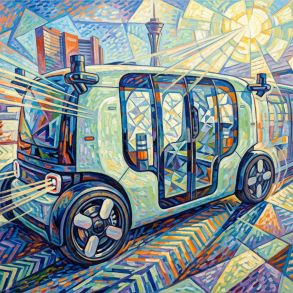
TLDR: Waymo is targeting over one million paid weekly rides by end of 2026, backed by $16 billion in new funding at a $126 billion valuation. The company plans to expand to 10-plus new US cities and London while deploying next-generation Ojai robotaxis. Nashville has already gone fully driverless.
GCBC previously covered Waymo’s operational growing pains, including a standoff with Austin ISD over school zone safety violations and 20 documented bus route incursions. Since then, the company hasn’t retreated. It has announced the most aggressive autonomous vehicle expansion in the industry’s history, backed by the kind of capital that turns ambition into infrastructure.
The Numbers Behind the Ambition
Waymo’s co-CEO outlined the target in a February 11 Bloomberg interview: more than one million paid weekly robotaxi rides by the end of 2026. The company quadrupled its trip volume in 2025 and is currently running over 250,000 weekly rides across its operating cities.
The funding to support that expansion arrived in February: $16 billion raised at a $126 billion valuation. That figure makes Waymo one of the most valuable private companies in the automotive ecosystem, worth more on paper than Rivian, Lucid, and most legacy supplier groups. The capital is earmarked for fleet expansion, technology deployment, and the operational buildout required to launch in more than a dozen new markets simultaneously.
The Expansion Map
Waymo’s 2026 city rollout is the widest AV expansion ever attempted in a single year:
| 2026 Expansion City | Status |
|---|---|
| Nashville | Driverless; launching with Lyft |
| Dallas | 2026 launch planned |
| Denver | 2026 launch planned |
| Detroit | 2026 launch planned |
| Houston | 2026 launch planned |
| Las Vegas | 2026 launch planned |
| Orlando | 2026 launch planned |
| San Antonio | 2026 launch planned |
| San Diego | 2026 launch planned |
| Washington D.C. | 2026 launch planned |
| London | 2026 (first international market) |
Source: Bloomberg, TechCrunch, CNBC reporting, February 9–12, 2026
Nashville is the leading indicator. Waymo has removed human safety drivers entirely and is launching commercial service through a partnership with Lyft. It’s the clearest signal yet that Waymo’s confidence in fully driverless operation has moved past the cautious, geofenced deployments that characterized its earlier markets.
London marks Waymo’s first international launch, a significant step that introduces the company to a regulatory environment, driving patterns, and road infrastructure entirely different from its US operations.
Gen-6 Ojai: The Hardware Upgrade
The expansion is paired with a technology refresh. Waymo has begun deploying its Gen-6 “Ojai” robotaxis, featuring upgraded lidar and radar systems designed to handle a wider range of driving conditions. The hardware matters because each new city introduces edge cases (weather, road design, traffic patterns) that the technology must handle without human backup.
The Gen-6 platform also represents a step toward fleet economics that can sustain commercial viability. Waymo hasn’t disclosed per-ride unit economics, but the scale of $16 billion in fresh capital and a target of one million weekly rides implies the company believes the path to operational profitability runs through volume, not margin.
What This Means for Dealers, Fleet Ops, and Insurers
For the broader robotaxi landscape GCBC has been tracking, the 2026 expansion plan shifts the conversation. At 250,000 weekly rides, Waymo was an interesting experiment. At one million, it becomes a transportation mode.
That scale affects multiple stakeholders. Dealers in expansion cities may see a long-term demand shift as ride-hailing displaces some personal vehicle purchases. Fleet operators face a competitive dynamic they haven’t encountered before: a rival with no driver costs and decreasing per-mile technology expense. Insurers need to recalibrate liability models for a fleet where the manufacturer, not the driver, is responsible for every decision.
Waymo isn’t the only company moving. Baidu’s Apollo Go launched a partnership with Uber in Dubai this week, and Pony.ai began mass-producing its Gen-7 robotaxi with Toyota in China at a 70% cost reduction from the prior generation. The AV industry is crossing from experiment to infrastructure on multiple fronts simultaneously.
For the auto industry, the most important metric isn’t how many cars Waymo replaces. It’s how many trips. At a million a week, autonomous mobility stops being a tech story and starts being a transportation one.